C is for CATS
At the beginning of the month, we had a really wonderful trip to see my family in the northeast. The entire week, every part of the journey, exceeded all expectations for both relaxation and enjoyment. And I returned home feeling connected and complete.
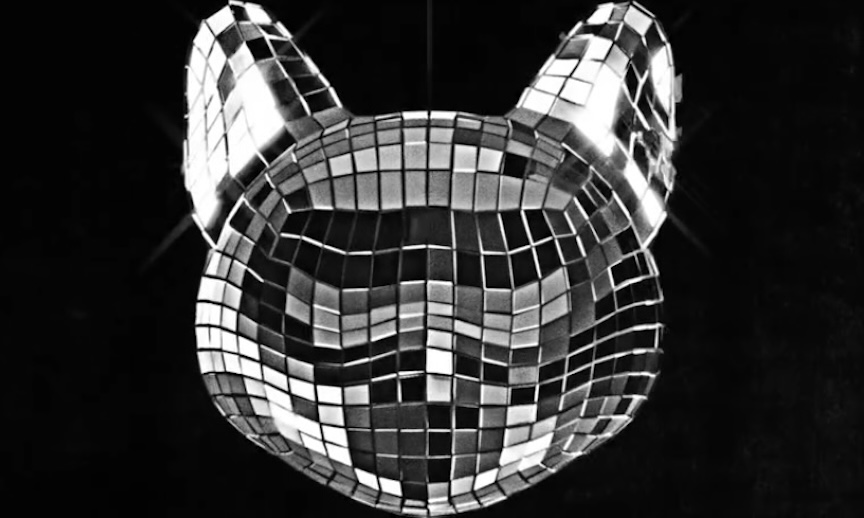
One of the highlights of our vacation was a surprise trip to Manhattan with tickets to see the new revival of Cats on Broadway. My niece, who lives in central Connecticut, had told us in advance to pack for “a night on the town.” I imagined that maybe we’d go out to hear a band in Hartford, or to play trivia at a local brewpub. It never occurred to me that she meant THE Town, NYC, a couple of hours away by train. And while I’d heard about and been intrigued by the idea of Cats: The Jellicle Ball when it was off-Broadway a year or so ago, it wasn’t even close to being on my radar for this week, which I was anticipating would be an extremely low-key family visit.
The show was spectacular and thrilling. The audacity and joy of it blew me away. Seriously, if we had been able to buy tickets to stay right in our seats and watch the whole two-and-a-half-hour thing again immediately, I’m pretty sure we would have.
I know lots of people who can’t stand Cats, Andrew Lloyd Webber’s 1981 smash-hit mega-musical. People have derided it for years for fantastical excess and late-disco strangeness. I have a fondness for the show because my sister took me to see a tour when I was a teenager, but absolutely I understand all the complaints about it. It’s pretty weird and doesn’t have much plot. The whole thing is a bunch of street cats with fanciful names — based on a quirky 1939 collection of poems by T. S. Eliot — introducing themselves, each hoping to be selected for reincarnation and a new life. You just have to kind of roll with it as a mostly-unintelligible extravaganza of dance and costumes with catchy melodies and lush orchestrations.
This revival, though, made sense to me in a way that the original never quite managed. It’s been grounded with a sense of real (though still magical) time and place — situated in the Queer Black and Latino Ballroom scene of Harlem, from the late-70s to the present. I understood who these cats were and what they were doing. Each was there to showcase their fabulous individuality and to celebrate their chosen family and community. It was a dance-off and a fashion show. It honored history and looked to the future at the same time. It was a rousing hybrid of Ballroom and Broadway. And we, the audience, weren’t there merely to watch but to participate in creating the event. I friggin’ loved it.
So, I’ve been thinking fairly nonstop about Cats: The Jellicle Ball, wondering what sermon it might inspire. Perhaps something about reinvention, redemption, and second-chances… Those are all themes of the original musical, as well as pertaining to its re-imagined return.
Then last Sunday, Patty sang a beautiful song, “The Lost Words Blessing,” and shared a little about the story behind it, which added a whole other layer to my rumination on this topic.
The Oxford University Press produces a Junior Dictionary, designed especially for children around 7 years old, to promote literacy and help teach the pronunciation, spelling, and meaning of 10,000 or so “essential” words. In 2007, the OUP published a controversial update that met great backlash from writers, parents, and conservationists because it eliminated about 50 words associated with the natural world to make room for newer words related to technology and media. Acorn, moss, heron, and dandelion were all cut in favor of chatroom, voicemail, blog, and celebrity. It’s a fairly stark cut-and-paste (another word that was added), and I get why people were upset.
My first thought is: why did they need to eliminate any words at all? I mean, one of the very handy things about our age of digital technology is that there’s plenty of room, limitless room in fact, for all the words and information. Nobody’s having to lug around a heavy multi-volume set that needs its own special reading podium. We’ve got the entirety of human knowledge readily available in our pockets. We can — and do! — have both broadband and otters, for heaven’s sake.
They also cut a number of religious words, which was kind of interesting. Sin and saint are no longer in there. At first glance, maybe that’s not a terrible thing. But, then again, I’m not sure that canceling words really rids us of their concept; we might just be hobbling our ability to discuss the things that make us uncomfortable.
I don’t know how this is all going to come together (if it does), but here are some of the questions I’m trying to untangle this week:
- As we make room for the new — in ourselves and in the world — can we allow this to be a process of expansion rather than elimination?
- How do we include all that we’ve been in who we’re becoming? As individuals, as community, as a nation. Remembering history to avoid making the same mistakes over and over, yes, and also to acknowledge our growth and to celebrate our progress.
- How to greet our widening gyre of information not with overwhelm and option paralysis, nor a reactionary oversimplification and dumbing-down, but rather with a sense of possibility and wonder and ever-more-intricate connection between and amongst all of it?
A is for Andrew, a frightened gay kid in rural upstate New York, and for Andrew, the self-actualized badass writing this essay. B is for blog and buttercup. C is for 1981 Cats and for 2026 Cats: The Jellicle Ball, as well as all the cats that T. S. Eliot imagined in 1939.
C can be for chatrooms and cache, for clover and chestnuts, for community and creation.
I can’t wait to be with you this Sunday, April 19. 10:00am at q-Staff Theatre. With the divine Patty Stephens. XO, Drew
©2026 Drew